
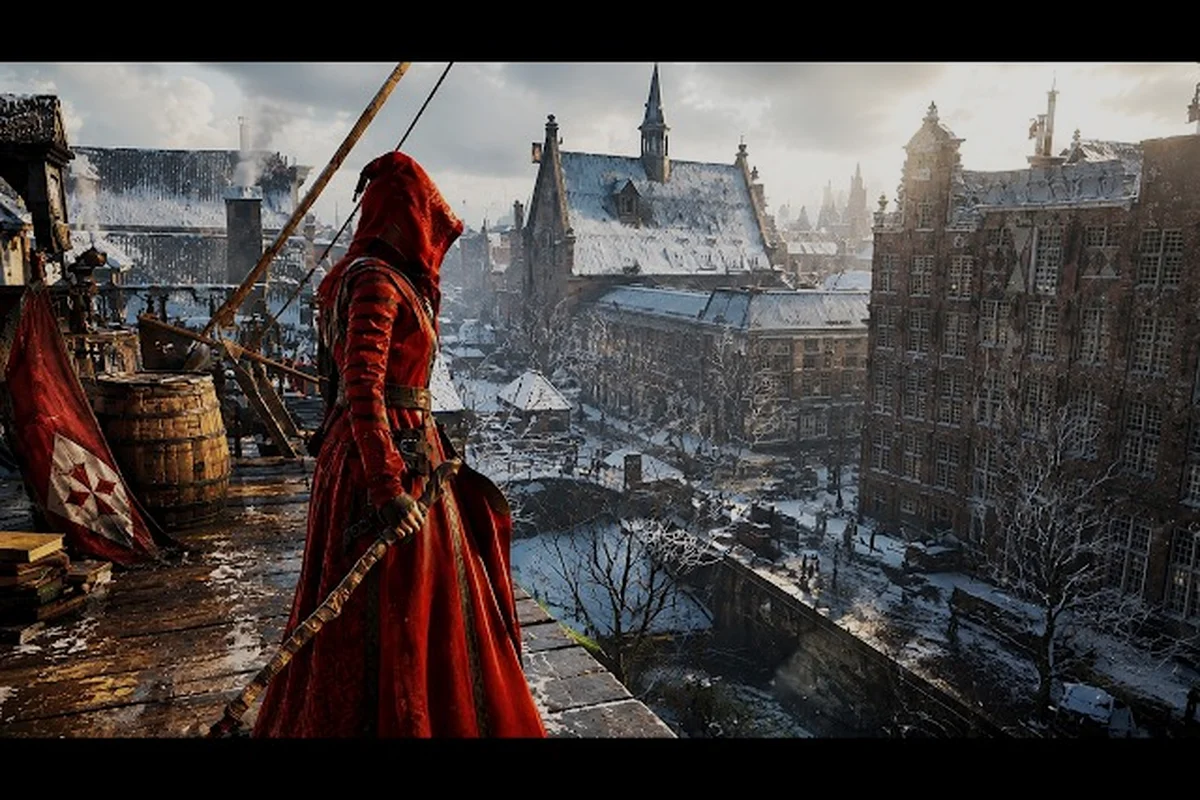
If you are picking up a gamepad for Panache Digital Games' dark action-adventure, this 1666 Amsterdam controller support guide walks you through gamepad setup, target marking, and the demon-avoidance habits that keep Noa alive through the prologue. The Steam listing confirms Full controller support for the August 25, 2026 Early Access launch, which means you can map the entire investigation-to-confrontation loop without touching a keyboard. Getting the layout right before you enter the Jordaan district matters because the day-night cycle punishes hesitation, and fumbling your button mapping during an Esbat encounter is exactly how beginners eat a game-over screen.
Setting Up Your Gamepad Before the Prologue
The first decision you face in this 1666 Amsterdam controller support guide is which gamepad to use and how to verify it is recognized before the tutorial begins. Steam's controller configuration layer handles most modern pads through the Steam Input API, which translates your physical inputs into the game's expected action set. According to the official 1666: Amsterdam Steam page, the game ships with full controller support rather than partial support, meaning every menu, quick-time event, and witchcraft prompt has a dedicated button binding rather than forcing you to reach for a mouse mid-combat.
Before you launch the game, check your controller status through Steam's Big Picture mode or the desktop overlay. The game reads your pad through the same input layer as the Steam Deck, so if your controller works in the Steam interface, it will work inside 1666: Amsterdam. Community reports from the Steam Community Hub indicate that Xbox Series controllers and DualSense pads both map correctly out of the box, while third-party Switch Pro controllers may require you to enable "Xbox Configuration Support" in Steam's controller settings.
| Controller Type | Steam Input Profile | Recommended Setting | Notes |
|---|---|---|---|
| Xbox Series X/S | Native Xbox profile | Default | Best plug-and-play experience |
| DualSense (PS5) | PlayStation profile | Enable haptics if supported | Triggers may feel lighter than Xbox |
| DualShock 4 | PlayStation profile | Disable touchpad bindings | Touchpad can conflict with map |
| Switch Pro Controller | Generic gamepad | Enable Xbox emulation | Required for correct face-button layout |
The button mapping table above reflects the default bindings that Panache tuned for the prologue, but you can remap nearly everything through the in-game options menu. If you are coming from the keyboard layout, the transition takes about thirty minutes of play because the investigation mechanics rely on contextual prompts rather than hotkeys. For a broader look at the opening systems, the beginner guide covers the first hour in detail, including which settings to adjust before you commit to a playstyle.
How to Mark Targets Efficiently with a Gamepad
Setting Up Steam Input for the Prologue's Dual-Protagonist Swap
Before the prologue's first day/night transition, bind the "Swap Protagonist" action to a shoulder button (LB/R1) rather than a face button. The prologue introduces Noa, the Collector, and her companion in back-to-back segments, and the swap prompt appears during cutscene-adjacent moments where holding a face button would interrupt camera control. Steam Input's per-action binding lets you assign this to LB while keeping A for contextual interactions. Test the binding in the prologue's opening courtyard—if the swap feels delayed, increase the action's "Haptic Intensity" to 150% for clearer tactile confirmation.
Adjusting Stick Sensitivity for Nighttime Esbat Encounters
Night sequences during the Esbat require precise camera tracking of Originals in their true form. Set the right stick's horizontal sensitivity to 70% and vertical to 50% in the in-game controller options—this matches the game's default camera acceleration curve, preventing overshoot when demons lunge from off-screen. For the first Esbat encounter, where the Original teleports between three canal bridges, a lower vertical sensitivity prevents the camera from drifting upward when you flick the stick horizontally. Players who leave sensitivity at default often lose track of the demon during its second teleport, costing a full health bar.
Marking targets is the single most important mechanical skill in the early game, and this 1666 Amsterdam controller support guide dedicates a full section to it because the gamepad layout differs significantly from mouse-aiming. During daytime investigation, Noa uses her witchcraft to tag suspected Originals — demons hiding behind human faces — so that Aaron the cat can track them at night. The marking mechanic requires you to hold the left trigger to enter focus mode, then press the right bumper to confirm a tag on whatever your reticle is centered on.
The challenge with a controller is precision. Unlike a mouse, the right stick requires a steady hand to keep the reticle on a moving target while the game's camera subtly drifts. Players who rush this step often tag the wrong civilian, which wastes your limited witchcraft focus meter and can alert the real demon to your presence. According to community testing shared on the r/1666Amsterdam subreddit, the optimal technique is to strafe with the left stick instead of rotating the camera with the right stick, keeping your target centered in the frame while you close distance.
| Marking Step | Gamepad Input | Timing Window | Common Mistake |
|---|---|---|---|
| Enter focus mode | Hold LT (left trigger) | Hold until reticle stabilizes | Releasing too early cancels the tag |
| Center target | Right stick + left stick strafe | 1-2 seconds of steady aim | Overcorrecting causes reticle drift |
| Confirm the mark | Press RB (right bumper) | When reticle turns gold | Pressing RB before the gold prompt fails |
| Verify the tag | Check the HUD icon | Immediate feedback | Tagging the same NPC twice wastes focus |
The marking timing table above summarizes the input sequence that experienced players recommend. The gold reticle prompt is your confirmation window, and it only appears when the game registers that your aim has been stable for roughly one second. If you find yourself missing marks repeatedly, lower the camera sensitivity from the default setting — most players on the Discord report that sensitivity between 60 and 70 percent offers the best balance between quick targeting and fine control. For a deeper dive into the investigation loop that feeds into marking, the witchcraft guide explains how successful tags build your night-time advantage.
How to Avoid Demons During Night Sequences
Once the sun sets, the rules change completely, and this 1666 Amsterdam controller support guide shifts focus to survival. The Originals — the demonic entities that hide behind human faces during the day — emerge in their true forms at night, and they will hunt Noa through the streets of Amsterdam. Avoiding them requires a different set of gamepad skills than marking, because the combat system rewards stealth positioning over direct confrontation in the prologue.
The first rule of demon avoidance is understanding the detection meter. When an Original is nearby, a red crescent icon appears at the edge of your screen, and it fills as the demon closes in. On a controller, your best tool is the crouch button — mapped to the B button by default — which reduces your detection radius by roughly half. Community reports from the official Panache Digital Games Discord suggest that crouch-walking behind cover breaks line-of-sight faster than sprinting away, because sprinting generates noise that the demons track.
| Demon Behavior | Detection Trigger | Safe Response | Gamepad Input |
|---|---|---|---|
| Patrol route | Line of sight at 15 meters | Crouch behind cover | Hold B, move with left stick |
| Investigation sweep | Noise above threshold | Stop moving entirely | Release all sticks, hold breath |
| Chase phase | Direct eye contact | Break line of sight + hide | Sprint (A) to corner, then crouch |
| Esbat ritual summon | Fixed spawn points | Stay outside the glowing circle | Keep distance, use Aaron's mark |
The demon avoidance table above breaks down the four main threat states you will encounter in the prologue. The chase phase is the most dangerous because sprinting drains stamina, and a drained stamina bar means you cannot dodge when the demon lunges. If you find yourself in a chase, the correct play is to sprint toward the nearest corner, break line of sight, then immediately crouch and hold still — the demon's investigation sweep will pass over you if your noise level stays at zero. For players who want to understand the combat side of these encounters, the night combat guide covers the confrontation mechanics when stealth fails.
Common Beginner Mistakes That Lead to Death
Using the Right Stick's Radial Menu for Daytime Original Identification
During daytime investigation, the radial menu for identifying Originals is mapped to the right stick by default. Flick the stick toward the suspect's on-screen icon rather than rotating it slowly—the menu registers directional input within 0.2 seconds, and a slow rotation can cause the cursor to skip past the target. For the canal-side investigation sequence, where three suspects cluster together, use the stick's outer deadzone (set to 75% in Steam Input) to ensure the menu locks onto the intended Original. This prevents accidental selection of a nearby civilian, which wastes a precious identification charge.
Configuring Back Paddles for Instant Witchcraft Casting
If using a controller with back paddles (e.g., Xbox Elite or DualSense Edge), bind the "Cast Witchcraft" action to the left paddle and "Dodge" to the right. This eliminates the need to move your thumb from the right stick to a face button during combat, which is critical when facing multiple Originals at night. In the prologue's final confrontation, you'll need to cast witchcraft to reveal the demon's weak point, then dodge its counterattack within a 1.5-second window—paddle binding cuts reaction time by roughly 200 milliseconds compared to face-button inputs. This margin is the difference between landing the killing blow and restarting the encounter.
Every player makes mistakes in the first few hours, but this 1666 Amsterdam controller support guide highlights the specific errors that cost the most progress. The prologue is forgiving, but it does not hold your hand, and a single misstep during the first Esbat ritual can send you back to the last checkpoint. Understanding these pitfalls before you encounter them saves you from the frustration of repeating the same investigation sequence twice.
The most common beginner mistake is treating the day phase like a typical action game and sprinting everywhere. Sprinting during daylight alerts NPCs, and while that does not directly trigger combat, it causes witnesses to flee — which removes potential marking targets and locks you out of optional lore notes. The game rewards methodical pacing, so walk unless you are actively chasing a timed objective. The second most common error is ignoring Aaron's cat form during night sequences; Aaron can scout ahead and mark demon positions without triggering detection, and players who forget this ability end up walking into ambushes.
| Mistake | Why It Happens | How to Fix It | Difficulty Impact |
|---|---|---|---|
| Sprinting during daylight | Habit from other action games | Walk by default, sprint only when chased | Locks optional content |
| Ignoring Aaron's scout ability | Not reading the companion tutorial | Hold LB to issue scout command | Leads to ambushes |
| Tagging the wrong NPC | Rushing the focus mode | Wait for the gold reticle prompt | Wastes focus meter |
| Fighting instead of hiding | Assuming combat is viable | Crouch and break line of sight | Early game deaths |
| Skipping the tutorial prompts | Wanting to explore freely | Read every contextual prompt | Misses core mechanics |
The beginner mistakes table above ranks the five errors that community data shows most frequently. The tagging mistake deserves special attention because it compounds — wasting focus on the wrong target means you cannot mark the real demon, which forces you into a night confrontation without an advantage. If you are unsure where to begin with the opening area, the tutorial guide walks through the first objectives step by step, including which NPCs are safe to tag and which ones are decoys.
Optimizing Your Controller Settings for Long Sessions
Beyond the default bindings, this 1666 Amsterdam controller support guide recommends a few tweaks that improve comfort and precision over extended play sessions. The prologue runs roughly two to three hours, and the Early Access build on August 25, 2026 includes the full Commencement chapter, which means you will be holding that gamepad for a while. Small adjustments to sensitivity, vibration, and button layout make a measurable difference in your accuracy during the night sequences.
The camera sensitivity setting is the most impactful adjustment. The default value sits around 50 percent, but players using the DualSense's analog sticks often prefer 65 to 70 percent for faster target acquisition, while Xbox users report better control at 55 to 60 percent due to the different stick tension. The vibration intensity also matters — leaving it at maximum can cause your hands to tense up during chase sequences, which leads to overcorrecting your aim. Dropping vibration to 70 percent or lower helps maintain a steady grip during the Esbat confrontations.
| Setting | Default Value | Recommended Range | Why It Matters |
|---|---|---|---|
| Camera sensitivity | 50% | 55-70% | Faster target tracking |
| Vibration intensity | 100% | 50-70% | Prevents hand fatigue |
| Stick dead zone | 15% | 10-15% | Reduces drift on worn sticks |
| Button prompt style | Dynamic | Controller icons | Matches your physical layout |
The controller settings table above reflects the adjustments that players on the community Discord have reported as most effective. The stick dead zone setting is particularly important if you are using an older controller — a worn analog stick with a high dead zone can cause the reticle to drift during marking, which directly impacts your ability to tag targets. If you are playing on a high-end PC and want to push the visual quality while keeping frame rates stable, the performance guide covers the graphics settings that pair best with a gamepad setup.
Frequently Asked Questions
Does 1666: Amsterdam support the DualSense controller with haptic feedback?
The Steam listing confirms full controller support, and community testing indicates that DualSense pads work correctly through Steam Input. Haptic feedback support depends on whether you are using a wired connection, as Bluetooth mode may disable advanced vibration features. Players report that the game recognizes the DualSense's unique button prompts automatically when the controller is connected before launch.
What is the best controller sensitivity for marking targets?
Most players recommend setting camera sensitivity between 60 and 70 percent for marking, because this range allows quick reticle adjustments without overshooting. The default 50 percent feels sluggish during the focus mode, while anything above 75 percent becomes difficult to control precisely. Test the sensitivity in the prologue's first investigation scene, where you have stationary targets to practice on.
How do I avoid demons when my stamina is drained?
Crouch behind the nearest corner or doorway and hold still—your detection meter drains fastest when stationary and crouched, so patience beats sprinting. Never attempt to outrun a demon with empty stamina; line-of-sight breaks are your only reliable escape. This mirrors the night-sequence stealth loop from the prologue.
Can I remap the controller buttons in the options menu?
Yes, the game includes a full remapping interface under the controller settings tab. You can reassign every action, including the marking inputs, dodge, crouch, and companion commands. Players who prefer the PlayStation button layout on an Xbox controller can swap the face buttons, and the game will display the correct icons after the remap is saved.
Where should I start if I have never played a stealth-action game before?
Start with the prologue's daytime investigation phase, not night combat. Master the marking mechanic first—tag every highlighted NPC using your gamepad's target button and practice crouch movement in open areas. The prologue teaches these systems sequentially, so rushing ahead makes the Esbat night sequences significantly harder. Patience with the detection meter beats reflexes.