
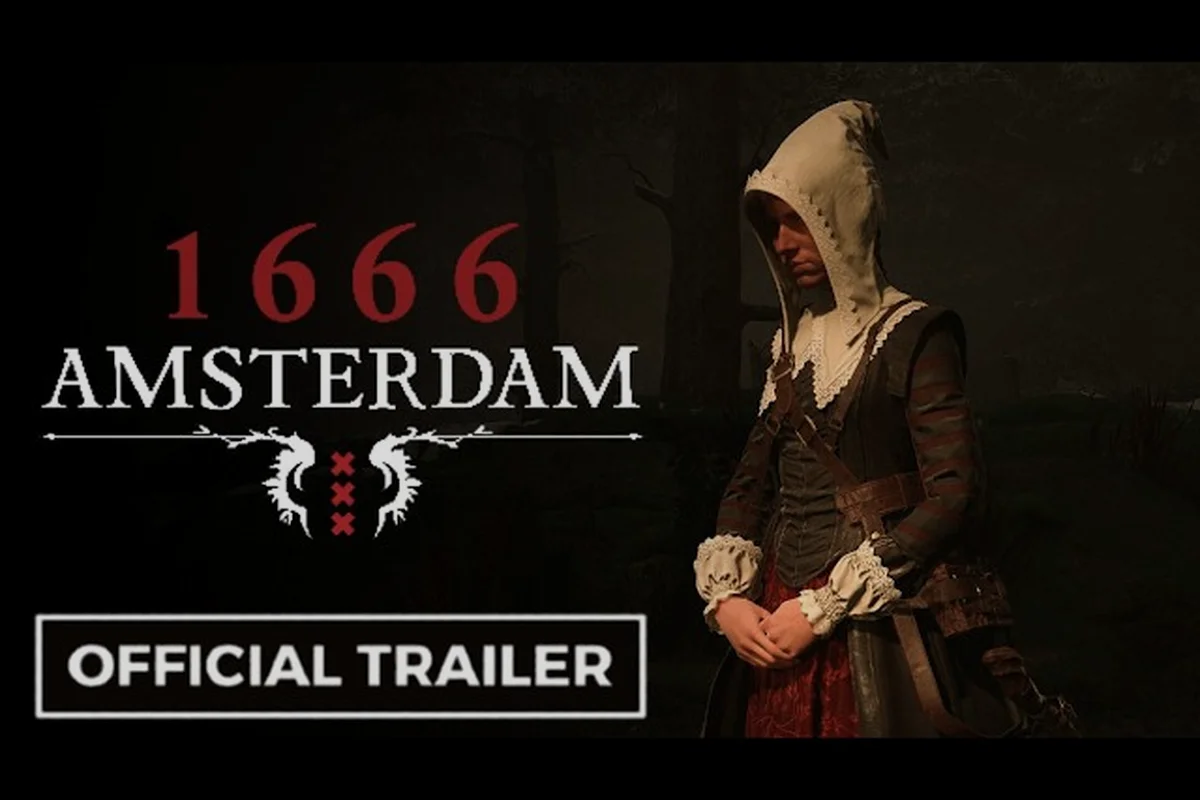
The 1666 Amsterdam story mode weaves a dark supernatural tale across three timelines, and the narrative choices you make as Noa Brooklyn determine who lives, who dies, and what kind of Collector you become. Unlike a linear adventure, this game tracks your moral choices through dialogue, a suspicion meter, and full-moon Esbat confrontations, which means every decision carries weight that echoes into later chapters. If you are trying to understand how the story branches and which decisions actually matter, this breakdown of the 1666 Amsterdam story decisions will help you navigate the murky waters of 17th-century occult politics, and since the prologue’s choices set the tone for every allegiance and betrayal that follows, our 1666 Amsterdam Prologue Choices Explained guide maps out exactly which early dialogue options lock you into which narrative path before the real scheming begins.
How 1666 Amsterdam Story Mode Frames Its Core Conflicts
The 1666 Amsterdam story mode places you in the role of Noa, a young apprentice apothecary who secretly belongs to the Zaindaris coven. During her Commencement ceremony in December 1665, she takes on the mantle of the Collector, a position that tasks her with identifying and confronting the Originals — centuries-old entities that hide behind human faces and draw power from a corrupting force called Nux. The official 1666: Amsterdam on Steam page describes the core loop as investigating by day, uncovering truths at night, and then marking targets before confronting them in their true forms at the Esbat.
What makes the 1666 Amsterdam story mode stand out is its dual-face structure. You experience the world through Noa's eyes during daylight hours, gathering clues and building relationships, but the night reveals a hidden layer of deception where nothing is as it seems. The game also introduces Aaron, a second playable character who experiences the world through a cat's eyes, switching perspectives to reveal details Noa cannot see. This dual-perspective mechanic directly feeds into the narrative choice system, because information gathered as Aaron often changes how you interpret Noa's interactions.
The story so far, based on community reports and the official prologue, revolves around debt and restitution. The Zaindaris believe the Originals owe a debt to the world, and Noa's job is to collect what is owed. However, the moral choices in 1666 Amsterdam story mode constantly ask whether the debt justifies the method. Do you expose an Original publicly, risking panic and chaos, or do you handle things quietly, preserving the facade that keeps Amsterdam stable?
Your playthrough is shaped by three interconnected narrative pillars: moral choice systems, investigative branching, and consequence-driven pacing. Each decision—whether sparing a suspect or exposing a conspiracy—feeds into the game's "web of intrigue" mechanic, altering which of the 12 possible endings you unlock. For instance, siding with the corrupt magistrate in Act II locks you out of the true-rebel faction questline, while choosing the orphanage route opens a hidden cache of plague-cure documents that reshape Act III's climax, ensuring no two runs share the same thematic weight.
-
The Commencement choice: Your companion selection during the ceremony binds a specific character to your path, affecting which scenes you unlock and how other NPCs react to you.
-
The suspicion meter: Every dialogue choice raises or lowers how much the Originals trust you, which directly impacts how difficult your Esbat confrontations become.
-
The Esbat decision points: When you finally corner an Original, you choose how to extract the debt — through force, negotiation, or deception — and each method produces different story outcomes.
-
The three-timeline connection: Events in 1666, 1999, and the present day are linked, and choices in one era can ripple forward to change what you discover in another.
Because the prologue is only a 30-minute narrative experience, many players underestimate how much the full game expands on these systems. According to community data from the Steam Community hub, the full release introduces far more branching than the prologue suggests, with companion relationships evolving based on how consistently you honor your commitments.
How Narrative Choices Shape Noa's Journey
The 1666 Amsterdam narrative choice system operates on several layers simultaneously, and understanding how they interact is essential for anyone who wants to see the full range of story outcomes. At the surface level, dialogue options let you respond to NPCs with varying degrees of honesty, aggression, or manipulation. But beneath that, the game tracks your decisions across multiple invisible metrics that determine which story arcs become available.
The most significant 1666 Amsterdam story decisions occur during the Esbat confrontations. When you identify an Original and corner them during the full moon, you are not simply fighting a boss — you are making a judgment call about how justice should be served. The official game description notes that each target can be approached in multiple ways, and strategy, timing, and choice define the outcome. This means you can choose to fight, to negotiate, or to expose the Original's true nature to the public, and each path leads to different narrative consequences.
According to player experiences shared on r/1666Amsterdam, the companion choice in the prologue has a much larger impact than initially apparent. One companion might push you toward more aggressive solutions, while another encourages mercy and rehabilitation. These companions do not just offer commentary — they actively participate in scenes, provide alternative solutions during confrontations, and can even intervene to save you from poor decisions.
The narrative choice mechanics also extend to how you handle the Nuxefer, the grimoire that chronicles Noa's journey. As you record your findings and decisions, the book physically changes, reflecting the moral path you have chosen. This visual feedback reinforces that the 1666 Amsterdam story decisions are not cosmetic — they leave marks on the world and on Noa herself.
The Role of the Suspicion Meter
The suspicion meter is one of the most underrated mechanics in the 1666 Amsterdam story mode. This hidden (or partially visible) tracker determines how much the Originals and their human allies trust your cover story. If you ask too many pointed questions during the day, or if you show too much knowledge about occult matters, suspicion rises. When suspicion gets too high, Originals become harder to corner, some dialogue options disappear, and certain characters refuse to cooperate with you.
Players who want to maintain a stealth-focused playthrough should prioritize building trust before making moves. The game rewards patience, because a well-placed question at the right moment can open up a peaceful resolution that would otherwise require combat. However, players who enjoy direct confrontation can also weaponize suspicion — making the Originals nervous enough to slip up and reveal information they would normally keep hidden.
The Companion Binding System
The companion choice during the Commencement ceremony is the first major 1666 Amsterdam story decision you make, and it sets the tone for the entire playthrough. The prologue presents this as a binding choice, meaning you cannot change companions later without starting a new game. Each companion brings different skills to investigations, different dialogue perspectives, and different moral leanings that influence which Esbat resolutions are available.
Community testing suggests that companion loyalty is tied to how consistently you make choices that align with their values. If you choose a companion who values mercy but then execute every Original you catch, that companion will become distant, offer fewer suggestions, and may even withhold crucial information during investigations. This creates a natural incentive to commit to a moral path rather than opportunistically switching between approaches.
The Three-Timeline Structure and Its Impact on Story Decisions
One of the most ambitious aspects of the 1666 Amsterdam story mode is its three-timeline narrative structure. The story unfolds across 1666, 1999, and the present day, with each era revealing fragments of a larger truth. According to the Wikipedia entry on 1666: Amsterdam, Noa operates in the 17th century, Aaron is a university professor involved in a 1999 occult ritual, and Clio — Aaron's daughter — investigates in the modern day. The connection between these timelines is the black cat familiar that Noa chooses during her Commencement, because Aaron's consciousness eventually ends up inside that cat's body.
This structure means that 1666 Amsterdam story decisions made in one timeline can have consequences in another. For example, if Noa spares an Original in 1666, that Original might still be alive in the modern day, creating a different antagonist for Clio to face. Conversely, actions taken by Aaron in 1999 can retroactively change what Noa knows or can access in 1666, because the ritual that sends Aaron's consciousness back in time creates ripples that affect the past.
The three-timeline structure also affects how you interpret the 1666 Amsterdam themes of hidden identity and deceptive facades. Every character in the game wears some kind of mask — the Originals hide behind human faces, Noa hides her Collector identity from her apothecary colleagues, and Aaron hides his connection to the occult from his academic peers. The story asks whether removing these masks reveals truth or simply replaces one deception with another.
How Aaron's Perspective Changes the Narrative
Playing as Aaron, who experiences the world through a cat's eyes, fundamentally changes how you gather information. Cats can access spaces humans cannot, overhear conversations from hidden vantage points, and observe body language that human characters miss. This perspective is not just a gameplay gimmick — it directly feeds into the 1666 Amsterdam narrative choice system by providing information that Noa would never discover on her own.
For instance, while exploring as Aaron, you might overhear an Original confessing a secret weakness to an ally. When you switch back to Noa, you can use that information during the Esbat confrontation to negotiate from a position of strength. The game rewards players who thoroughly explore both perspectives, because the full picture of any given situation requires seeing it from both human and feline vantage points.
The Nuxefer as a Moral Record
The Nuxefer, the grimoire that chronicles Noa's journey, serves as both a gameplay mechanic and a thematic symbol. Every 1666 Amsterdam story decision you make gets recorded in its pages, and the book's illustrations and annotations change based on your moral path. A merciful Collector might fill the pages with sketches of spared Originals and notes about rehabilitation, while a ruthless Collector might inscribe warnings and death dates.
This record-keeping has practical implications because the Nuxefer is also a gameplay tool. Certain pages contain rituals or knowledge that only unlock when you have made specific choices. This means that replaying the 1666 Amsterdam story mode with different moral choices is not just about seeing different cutscenes — it is about accessing entirely different gameplay abilities and story paths.
Key Themes and Moral Dilemmas in the Story
The 1666 Amsterdam themes revolve around debt, restitution, witchcraft, and the danger of deceptive facades. The Zaindaris philosophy holds that the Originals owe a cosmic debt, and the Collector's job is to make them pay. But the game constantly complicates this simple moral framework by showing that the Originals are not uniformly evil. Some are genuinely remorseful, some are victims of circumstances, and some are simply trying to survive in a world that has moved past them.
The 1666 Amsterdam moral choices force you to decide what justice actually means. Is it proportional punishment for past crimes? Is it rehabilitation when possible? Is it public exposure to prevent future harm? The game does not provide a clear answer, and different companions, NPCs, and even the Originals themselves will argue for different interpretations.
One of the most debated moral dilemmas in the community involves a specific Original who appears genuinely reformed. According to player reports, this character has spent decades helping the poor and protecting Amsterdam from darker forces. Exposing them as an Original would destroy their life's work, but sparing them means ignoring the debt they owe. The game does not offer a third option, and the choice you make permanently affects how other Originals perceive you.
The Deceptive Facade Theme in Practice
The theme of deceptive facades is not just philosophical — it is a core gameplay mechanic. Every character you meet in 1666 Amsterdam story mode might be an Original wearing a human face, and your job is to see through these disguises. The investigation mechanics require you to gather evidence, observe behavior, and identify inconsistencies that reveal an Original's true nature.
This theme extends to the game's commentary on 17th-century Amsterdam itself. The city presents a facade of prosperity, religious tolerance, and civic order, but beneath the surface lurks corruption, occult conspiracy, and moral decay. The story draws parallels between the Originals hiding among humans and the way Amsterdam's elite hide their sins behind respectable facades.
The Power Owed and Its Consequences
The concept of "the power owed" is central to understanding the 1666 Amsterdam story decisions. The Originals gained their power through means that the Zaindaris consider illegitimate, and the debt they owe is not just symbolic — it is a literal transfer of power that the Collector must extract. This creates a moral tension because extracting the debt often requires violence or coercion, which raises the question of whether the Collector is any better than the Originals.
Players who want to explore this theme deeply should pay attention to how the game frames each Esbat confrontation. The Originals are not mindless monsters — they have motivations, histories, and often tragic backstories. The game invites you to understand them before you judge them, and the 1666 Amsterdam narrative choice system rewards players who take the time to investigate thoroughly before making their move.
Practical Strategies for Navigating Story Decisions
| Timeline | Playable Character | Key Event | Setting |
|---|---|---|---|
| December 1665 | Noa Brooklyn | Undergoes the Commencement ceremony, becomes the Collector, chooses a black cat familiar | 17th-century Amsterdam |
| 1666 | Noa Brooklyn | Investigates by day, identifies Originals, confronts them at the Esbat full-moon hunts | 17th-century Amsterdam |
| 1999 | Aaron (professor) | Participates in an occult ritual that sends his consciousness into Noa's cat | University setting |
| Present Day | Clio (Aaron's daughter) | Investigates the mystery left by her father and the events of 1666 | Modern-day Amsterdam |
If you want to experience the full range of what the 1666 Amsterdam story mode has to offer, you need a strategic approach to your playthrough. The game rewards consistency, thorough investigation, and a willingness to commit to a moral path. Here are practical strategies based on community experience and official game descriptions.
First, decide on your moral stance early. The companion binding system and the suspicion meter both reward consistency, so flip-flopping between mercy and ruthlessness will leave you with fewer options than committing to one approach. If you want to see peaceful resolutions, prioritize mercy from the start. If you want to see the darker outcomes, embrace the ruthless path and accept that some characters will become hostile.
Second, explore both perspectives thoroughly. The dual-character structure means that information gathered as Aaron can unlock new dialogue options for Noa. According to community reports, some of the best Esbat resolutions require knowledge that only Aaron can discover. Skipping the cat exploration sections will lock you out of these options.
Third, pay attention to the Nuxefer. This grimoire is not just a record of your journey — it is a tool that unlocks new abilities and story paths. Check it regularly to see what new pages have been added and what rituals have become available based on your choices.
Choosing the utilitarian path prioritizes the city's collective survival, often forcing you to sacrifice individual citizens for the greater good—a decision that dramatically shifts the narrative toward civic engineering and resource management. Conversely, a deontological approach, which upholds unwavering moral rules, frequently locks you out of the most efficient solutions, pushing you into riskier stealth sequences that yield lower resource yields but preserve your character's integrity. This core tension between pragmatism and principle is the engine of 1666 Amsterdam story mode, as your consistent alignment in these moral choices doesn't just alter dialogue but actively reconfigures which of the game's multiple endings are even accessible, rewarding a coherent ethical stance over a chaotic one.
| Moral Approach | Companion Behavior | Esbat Resolution Options | Suspicion Impact | Nuxefer Content |
|---|---|---|---|---|
| Merciful | Supportive, offers alternatives | Negotiation, rehabilitation paths | Lower risk of detection | Sketches of spared Originals, healing rituals |
| Ruthless | Distant, less cooperative | Execution, intimidation paths | Higher risk, but faster confrontations | Warnings, combat-focused rituals |
| Pragmatic | Mixed, situation-dependent | All options available but harder to unlock | Variable, requires careful management | Balanced record, diverse ritual options |
| Deceptive | Confused, trust issues | Manipulation, betrayal paths | Lowest immediate risk, highest long-term | Notes on secrets, illusion rituals |
The table above shows that there is no single "correct" way to play—each approach carries distinct trade-offs that ripple through the 1666 Amsterdam story mode. Prioritizing stealth during the Prologue, for instance, locks you out of the "Open Confrontation" dialogue branch with Van der Heijden, forfeiting a key clue about the conspiracy but preserving your cover for later infiltration missions. Conversely, aggressive play unlocks unique moral choices tied to the 1666 Amsterdam themes of justice versus survival, yet it can permanently close off the "Merchant Alliance" ending. Because the game's branching narrative tracks these decisions across multiple chapters, the design explicitly rewards replaying to experience different combinations of outcomes, ensuring no two playthroughs resolve identically.
Recommended Approach for First Playthrough
For your first playthrough, community consensus suggests starting with a pragmatic approach. This keeps your options open while you learn how the systems work. Focus on gathering as much information as possible before making any major 1666 Amsterdam story decisions, and do not commit to a fully merciful or fully ruthless path until you understand the consequences.
The pragmatic approach also makes it easier to manage the suspicion meter, because you can adapt your behavior based on how close you are to detection. If suspicion is getting high, you can lay low for a while. If you have room to maneuver, you can push harder for information.
How to Approach the Esbat Confrontations
Before each Esbat confrontation, you must have your 1666 Amsterdam story decisions locked in, because these are the only moments where the narrative branches irreversibly—unlike the smaller dialogue checks in the Achterburg alleyways, which merely shift faction reputation by a few points. The game’s hidden "Conviction" meter, tracked silently across all prior chapters, determines which of the three Esbat resolutions (Mercy, Judgment, or Sacrifice) is even available to you, not just which one succeeds. If your Conviction sits below 40, the Sacrifice option stays greyed out, forcing a binary choice that can lock you out of the "Cleansed City" ending entirely. So, before the ritual circle ignites, verify your Conviction tally in the Journal’s "Inner Turmoil" tab and ensure you’ve exhausted every side-quest tied to the Esbat’s three coven leaders—each one you skip permanently reduces your leverage in the final negotiation.
-
Complete investigation: Gather all available evidence about the target, including information from Aaron's perspective.
-
Companion alignment: Ensure your companion agrees with your planned approach, or at least understands why you are making this choice.
-
Suspicion management: If your suspicion is too high, the target may be on guard, making negotiation harder.
-
Nuxefer preparation: Check whether any rituals in the Nuxefer can help with this specific confrontation.
The table below summarizes the different Esbat resolution types and their typical outcomes, breaking down how each confrontation can conclude based on your accumulated evidence and prior 1666 Amsterdam story decisions. Note that the "Confrontation" path yields the most direct narrative payoff, while "De-escalation" often unlocks hidden character backstory, and "Withdrawal" may lock you out of the final act's moral choice.
| Resolution Type | Requirements | Typical Outcome | Risk Level |
|---|---|---|---|
| Forceful | High combat readiness | Original eliminated, debt collected by force | Medium — combat can fail |
| Negotiated | High trust, complete evidence | Original agrees to repay debt voluntarily | Low — but requires preparation |
| Deceptive | High manipulation skill | Original tricked into surrendering power | High — can backfire |
| Public Exposure | Low suspicion, public setting | Original exposed, community reacts | Variable — unpredictable consequences |
Each resolution type leads to different story branches, so choose based on the outcome you want to see. If you are trying to understand the full 1666 Amsterdam story so far, you will need multiple playthroughs to see all the variations.
Frequently Asked Questions
What is the 1666 Amsterdam story mode about?
The 1666 Amsterdam story mode follows Noa Brooklyn, a young apothecary who becomes a Collector for the Zaindaris coven. Her job is to identify Originals — ancient beings hiding behind human faces — and extract the power they owe. The story spans three timelines and features moral choices that shape the narrative.
How do narrative choices affect the story in 1666 Amsterdam?
The 1666 Amsterdam narrative choice system tracks your decisions through dialogue options, a suspicion meter, and Esbat confrontation choices. These decisions determine which story arcs unlock, how companions behave, and what endings are available. The game records your moral path in the Nuxefer grimoire, which also unlocks different abilities.
Can I change my companion choice in 1666 Amsterdam?
No, the companion choice made during the Commencement ceremony is binding for the entire playthrough. Each companion brings different skills, perspectives, and moral leanings, so choose carefully. To experience a different companion, you need to start a new game and make a different 1666 Amsterdam story decision at the Commencement.
What are the main themes in 1666 Amsterdam?
The 1666 Amsterdam themes include debt and restitution, deceptive facades, hidden identity, and witchcraft. The story asks whether the debt the Originals owe justifies the methods used to collect it, and whether removing masks reveals truth or creates new deceptions. These themes are explored through the three-timeline narrative structure.
Is the 1666 Amsterdam prologue representative of the full story mode?
No. The prologue is a 30-minute vertical slice introducing the Commencement and companion binding, but the full game adds the day/night investigation loop and Esbat confrontations. Its three-timeline branching across 1666, 1999, and present-day is far more complex than the prologue suggests.