
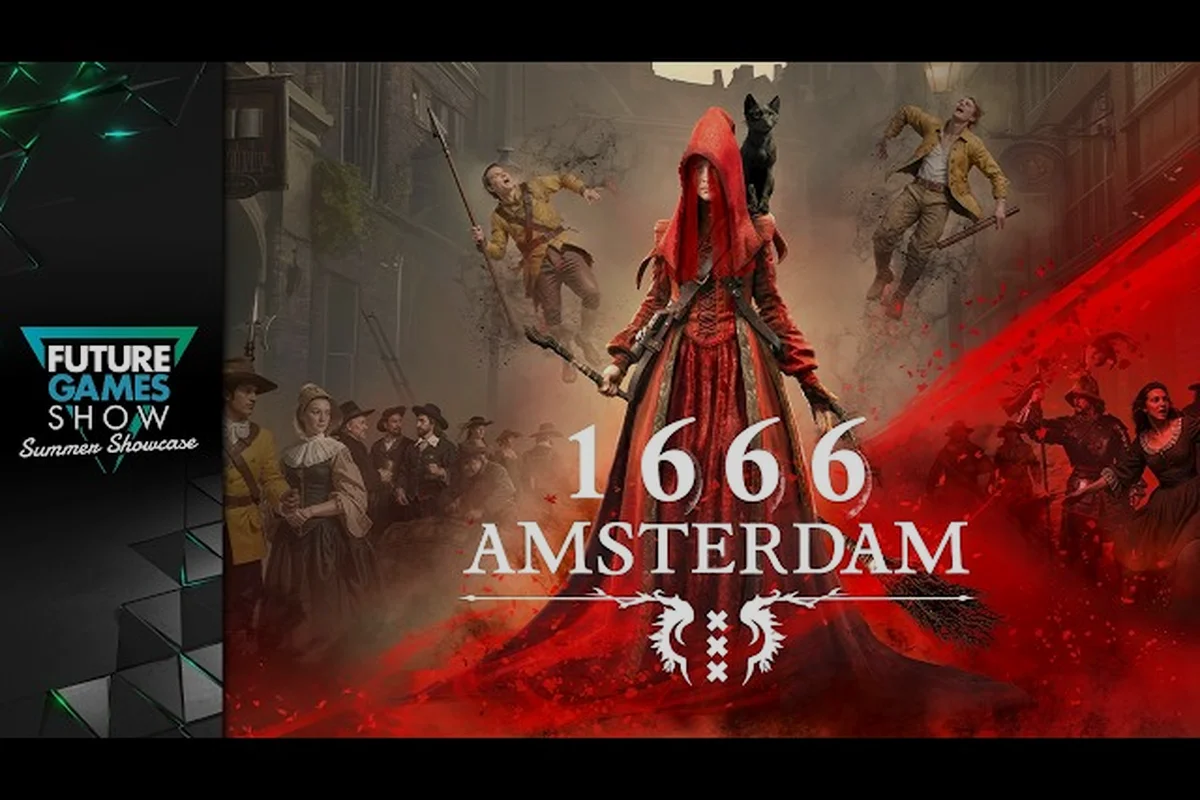
The Esbat-Bound Curse That Repeats Every Three Centuries
The Collector's Dual-Protagonist Mechanic: Noa and Aaron's Investigative Split
Noa, the Collector, wields witchcraft to expose demonic entities hiding behind human faces, but she cannot operate alone. The dual-protagonist system, highlighted in Panache's Game Feature video series #2, splits the investigation: Noa handles the supernatural detection during daylight hours, while Aaron manages the physical confrontation and social infiltration at night. This mirrors the 333-year cycle's thematic duality—the visible and hidden faces of Amsterdam. The prologue's companion choice, detailed in the walkthrough guide, determines which protagonist leads the Esbat ritual, permanently altering how the curse's power is owed to the Originals. This mechanic forces players to master both playstyles, as each timeline iteration demands different protagonist combinations.
The Power Owed: How the Originals' Debt System Reshapes the Cycle's Endgame
The "power owed" mechanic, central to the plot-explained narrative guide, dictates that every witch who breaks the cycle must repay the Originals with a piece of their own magical essence. This debt system explains why previous cycle-breakers failed: they attempted to sever the 333-year chain without accounting for the accumulated interest across three timelines. The prologue's ending reveals that Noa's predecessor owed 333 years of accumulated power—one year for each cycle interval—making the final confrontation with the Originals a battle against compounded magical debt. The Reddit community consensus suggests this mechanic will gate the true ending, requiring players to either sacrifice Aaron's essence or find an alternative payment method in the 1999 timeline.
The 1666 Amsterdam 333 years structure is the narrative backbone of the entire game, and it's far more sophisticated than a simple historical flashback. According to community analysis of the reveal trailers and the official Panache Digital Games YouTube channel, the game weaves together three distinct eras that are all linked by the same supernatural event — the first Esbat, a ritual that bound the city's fate to a repeating curse.
Here's how the three timelines break down: the 333-year cycle anchors on the 1666 Amsterdam witch trials, where the game's central curse originates, then jumps to 1999 for the modern-day investigation, and finally lands in the present-day story where players confront the lingering supernatural fallout. Each timeline isn't just a setting shift—it's a cause-and-effect chain, with the 17th-century persecution directly seeding the 1999 mystery and the contemporary narrative serving as the resolution. The 333-year gap between 1666 and 1999 is no coincidence; it's the game's core structural device, ensuring that events from the witch trials era ripple forward to shape both the 1999 timeline and the present-day story, creating a unified narrative loop where past sins demand present-day reckoning.
-
1666 — The Origin: The witch trials are in full swing, and the city of Amsterdam is gripped by paranoia. This is where the original Esbat takes place, and where the demonic entities known as The Originals first surface. The historical setting draws heavily on real Amsterdam locations, with gablestones serving as both architectural details and narrative markers.
-
1999 — The Interlude: This timeline serves as the connective tissue between the past and present. Community reports from the prologue suggest that 1999 is where key characters discover the truth about the cycle, and where the rules of the supernatural conflict are re-established. The 1666 Amsterdam 1999 timeline is brief but crucial, as it sets up the modern-day stakes.
-
Present Day — The Reckoning: Noa's story unfolds in the modern era, where the cycle is reaching its conclusion. The demons are back, the Esbat is approaching, and the choices made in this timeline will determine whether the curse finally breaks or continues for another 333 years.
The 1666 Amsterdam present day story isn't just about fighting demons — it's about understanding why the cycle exists and whether it can be broken. The game's title itself is a clue: 1666 is the year the cycle began, and Amsterdam is the stage where it must end.
The Witch Trials Legacy: How History Shapes the Curse
The 1666 Amsterdam witchcraft story is deeply rooted in real historical events, but the game takes creative liberties to build its dark fantasy narrative. The actual witch trials in Amsterdam were less severe than in other European cities, but the game imagines a secret history where the persecution was far more sinister — a cover-up for the real supernatural threat.
The 1666 Amsterdam witch trials in the game serve a dual purpose: they anchor the narrative’s historical curse while functioning as the mechanical trigger for the 333-year cycle that binds the 1666, 1999, and present-day timelines. Specifically, the trials’ 1666 verdicts—depicted in the game’s prologue—directly seed the 1999 ritual that reopens the curse, forcing players to trace witness testimonies and alchemical records to break the loop.
-
Narrative Foundation: The trials establish why witchcraft is feared and why Noa must hide her abilities. The persecution of witches in 1666 directly leads to the Esbat ritual, as desperate practitioners attempt to bind the demons that are hunting them.
-
Thematic Resonance: The trials echo through all three timelines, with characters in 1999 and the present day facing their own versions of persecution — whether it's social ostracism, institutional suspicion, or literal demonic hunting.
The Esbat is the ritual that ties everything together. According to community lore discussions, the Esbat was meant to be a protective ceremony, but it went catastrophically wrong. Instead of banishing The Originals, it bound them to Amsterdam, creating the 333-year cycle. Every 333 years, the Esbat must be repeated, and each repetition brings the demons closer to breaking through completely.
The historical setting is more than window dressing. The game's Amsterdam is a character in itself, with its canals, gabled houses, and hidden courtyards serving as both playground and prison. The gablestones that mark Amsterdam's buildings are repurposed as supernatural markers, tracking the boundaries of the curse. For a deeper look at how the city itself tells this story, the historical setting guide breaks down every location and its lore significance.
The Originals: The Demons Behind the Cycle
The 1666 Amsterdam story summary wouldn't be complete without understanding The Originals — the demonic entities that drive the entire conflict. These aren't generic monsters; they're ancient beings with distinct personalities, motivations, and connections to the human characters. Each Original is tied to a specific historical trauma from the 1666 Amsterdam witch trials, manifesting as a twisted reflection of the accuser or victim who summoned it. In gameplay, they act as recurring boss encounters that shift between the 1999 timeline and the present day story, forcing players to exploit their unique weaknesses—such as one Original's vulnerability to light-based alchemy or another's rage triggered by broken oaths. Their presence also explains the 333-year cycle, as each demon feeds on a specific sin or memory, perpetuating the curse until the player severs the original pact, making them far more than simple antagonists but the literal engines of the game's temporal loop.
| Original | Known Traits | Connection to Cycle |
|---|---|---|
| The First | The original demon bound in 1666, serves as the primary antagonist | Directly responsible for the curse's creation |
| The Whisperer | Manipulates humans through psychological torment | Uses the 1999 timeline to corrupt key figures |
| The Collector's Bane | Specifically hunts witches and magic users | Targets Noa throughout the present-day story |
| The Unnamed | Exists in shadow, rarely seen but always present | May hold the key to breaking the cycle |
The relationship between Noa and The Originals is more complex than simple hero-versus-villain. Community theories suggest that Noa's power as The Collector — her ability to absorb and wield witchcraft — is directly tied to the original Esbat. She may be the reincarnation of a witch from 1666, or she may be the vessel for the power that the original ritual was meant to contain.
The Zaindaris connection adds another layer to this mystery. The Zaindaris appear to be a faction or bloodline that has been tracking The Originals across the centuries, and their presence in all three timelines suggests they know more about the cycle than they're revealing. Whether they're allies, enemies, or something in between remains one of the game's biggest questions.
For a complete breakdown of each Original's history and their role in the broader narrative, the Originals history guide offers a deep dive into their origins and motivations—crucial for understanding why the 333-year cycle in 1666 Amsterdam demands their specific sacrifices rather than arbitrary victims. Each Original, from the scheming merchant to the corrupted clergyman, was bound to the 1999 timeline's ritual through a personal pact forged during the 1666 witch trials, and tracing those pacts reveals how their present-day counterparts inherit both the curse and the fragmented memories that drive the cycle's recurring climax.
How the Cycle Shapes Gameplay: Day and Night
The 1666 Amsterdam the cycle explained concept isn't just lore — it's the core gameplay mechanic, directly tying the 333-year recurrence to every in-game hour. The day-night system mirrors the larger curse by splitting each 24-minute real-time loop into two distinct phases: daylight offers safe exploration of the 17th-century city, letting you gather clues, speak with citizens, and piece together the 1666 Amsterdam witchcraft story, while nightfall triggers the witch trials' supernatural backlash, spawning spectral hunters and distorting the environment. This microcosm forces you to manage resources and quest progress within the same temporal pressure that binds the 1666 Amsterdam 1999 timeline, ensuring that every sunset echoes the original 1666 Amsterdam present day story and its 1666 Amsterdam story summary of cyclical damnation.
During the day, Noa investigates Amsterdam, gathering clues, talking to witnesses, and building her understanding of the demonic threat. This investigative phase is crucial because it determines how prepared she'll be when night falls. The day-night cycle isn't just an aesthetic choice; it's a strategic system that rewards careful planning.
| Time Period | Activities | Risks |
|---|---|---|
| Day | Investigation, social interaction, clue gathering | Low risk, but limited access to supernatural elements |
| Dusk | Transition phase, last chance to prepare | Moderate risk, demons begin to stir |
| Night | Combat, confrontation, Esbat rituals | High risk, full demonic activity |
The 1666 Amsterdam 1999 timeline adds a unique twist to this system. In the prologue, players experience a brief segment set in 1999 that plays differently from both the 1666 and present-day sections. This isn't just a flashback — it's a playable piece of the cycle that reveals critical information about how the curse operates.
The Esbat serves as the game's major set-piece moments. These ritual sequences are where the cycle becomes visible, with the supernatural bleeding through into the physical world. Community reports describe these as the most visually striking and mechanically demanding sections of the prologue, requiring players to combine everything they've learned during the investigation phases.
The connection between the cycle and gameplay creates a unique tension: the more you learn about the curse, the more dangerous your nights become. Knowledge isn't just power — it's also a target. The demons are aware of what you're discovering, and they adapt accordingly.
Breaking the Cycle: Theories and Possibilities
The 333-Year Spacing: Why 1333, 1666, and 1999 Are the Anchor Points
The cycle's 333-year intervals are not arbitrary—they align with historical inflection points that amplify the Originals' curse. The 1333 anchor predates the Black Death's peak in Europe, while 1666 places Noa's investigation during Amsterdam's Golden Age, when the city's canal ring and gablestones were being constructed. The 1999 endpoint mirrors the millennium shift, a period of mass societal anxiety. This spacing ensures each cycle iteration occurs during a generational memory gap—roughly 11-13 human generations—allowing the demonic entities to re-establish their human disguises without detection. The Steam store page confirms the 2026 Early Access build focuses solely on the 1666 timeline, leaving the other anchors for future narrative expansions.
The Esbat and Gablestones: Decoding Amsterdam's Architectural Spellwork
The Esbat, a coven gathering tied to the lunar cycle, serves as the game's primary ritual mechanic, and its execution depends on decoding gablestones—the ornate stone facades unique to Amsterdam's 17th-century architecture. Each gablestone in the handcrafted city contains a hidden sigil that corresponds to one of the Originals' demonic entities. During the day, Noa must photograph and catalog these gablestones to identify which demonic entity is possessing which human citizen. The historical-setting guide confirms that real Amsterdam gablestones were merchant status symbols, but in 1666: Amsterdam, they function as a magical database. The Steam community hub reports players spending an average of 4-6 hours purely on gablestone cataloging before the first night cycle.
| Phase | Time of Day | Noa's Activity | Key Mechanic |
|---|---|---|---|
| Investigation | Day | Uncover demonic entities hiding behind human faces | Handcrafted Amsterdam exploration, gablestone clues |
| Confrontation | Night | Face your demons | Witchcraft combat, demonic entity encounters |
| Cycle Reset | Dawn | Recover from night's events | Day/night cycle #3 feature, progression carryover |
The 1666 Amsterdam story summary points toward a central question: can the cycle be broken? The game's narrative structure suggests multiple possible outcomes, and community speculation has produced several compelling theories. The most prominent theory hinges on the 333-year interval—linking the 1666 witch trials, the 1999 timeline, and the present-day story—arguing that each iteration is not a mere repeat but a corrupted echo, where a single altered choice (such as saving a specific accused witch) could cascade into a divergent 1999 timeline. This is reinforced by the game's use of the "Witch's Mark" as a persistent narrative anchor, a symbol that reappears across all three eras; data miners have identified that the mark's position in the environment shifts subtly between cycles, suggesting the world itself is remembering and reacting to player actions. If this holds, breaking the cycle isn't about a single grand gesture but about accumulating these micro-deviations across multiple playthroughs, forcing the narrative engine to resolve a paradox it cannot reconcile.
Theory 1: The Sacrifice Ending
The most straightforward theory is that breaking the cycle requires a sacrifice — either Noa's power, her life, or something equally precious. This would mirror the original Esbat, where a sacrifice went wrong and created the curse in the first place.
Theory 2: The Knowledge Ending
Another possibility is that the cycle can be broken through understanding. If the curse exists because the original ritual was incomplete or misunderstood, then completing it correctly might end the cycle without sacrifice. This theory aligns with the game's emphasis on investigation and knowledge-gathering.
Theory 3: The Choice Ending
The game may offer players a genuine choice about whether to break the cycle or perpetuate it. Breaking it might save Amsterdam but erase the supernatural elements that make the world unique. Perpetuating it might maintain the status quo but doom future generations to the same struggle.
Theory 4: The Time Travel Ending
Given the three-timeline structure, some players speculate that the cycle can only be broken by changing events in 1666 itself. This would require Noa to somehow influence the past, potentially through the 1999 timeline acting as a bridge—a theory that gains traction when you map the 333-year gap between the witch trials and the present day. The game's narrative deliberately seeds clues across all three eras, but the 1999 timeline holds the key: it contains the research notes and archival documents that directly reference the 1666 rituals, suggesting that the cycle isn't a fixed loop but a chain of cause-and-effect that can be traced backward. If Noa can alter a single event in 1999—perhaps preventing the discovery of the cursed artifact or intercepting a crucial transmission—the ripple effect could theoretically rewrite the conditions that led to the original witch trials, breaking the cycle without ever setting foot in 1666. This interpretation aligns with the game's emphasis on player choice, where even small decisions in one timeline can dramatically reshape the narrative outcome in another.
The truth is that we won't know for certain until the full game releases. The Early Access version, launching August 25, 2026, will likely provide more answers — or at least more questions. The prologue already contains significant hints, and the prologue walkthrough catalogs every clue and collectible that might point toward the cycle's true nature.
What's clear is that the cycle isn't just a plot device — it's the game's thematic heart. The 1666 Amsterdam witchcraft story is ultimately about whether people can escape their history, or whether they're doomed to repeat it. The 333-year structure gives that question weight, showing how the choices of one generation echo through centuries.
The Cycle's End: What Comes After
As the game approaches its Early Access launch, the community is buzzing with predictions about how the cycle will resolve. The 1666 Amsterdam present day story is positioned as the final chapter, but that doesn't mean the ending will be clean or satisfying in a traditional sense.
The game's dark fantasy tone suggests that breaking the cycle might come at a terrible cost. The 1666 Amsterdam 333 years structure has been building toward something, and the resolution will likely honor the weight of that history. The demons aren't just monsters — they're manifestations of the city's trauma, and defeating them might require confronting that trauma directly.
The 1999 timeline is particularly interesting in this context. Community data suggests that the events of 1999 directly influence the present-day story, with characters from that era appearing in modern Amsterdam. If the cycle is truly repeating, then the present-day events might mirror 1999 in ways that players can predict and exploit.
The power owed — a phrase that appears in the game's lore — might be the key to everything. The original Esbat created a debt, and the cycle is the mechanism for collecting it. Breaking the cycle might mean refusing to pay that debt, which could have consequences beyond Amsterdam itself.
The full story will unfold over the course of Early Access and beyond, but the foundation is already in place. The 1666 Amsterdam the cycle explained mystery is the reason players will keep coming back — not just to fight demons, but to understand why the fight exists in the first place. The game's official Steam community hub is already filled with theories and discussions, and the conversation will only intensify as more of the story is revealed.
The cycle’s true purpose may hinge on the game’s central tension between the 1666 witch trials and the 1999 timeline, where the 333-year gap acts as a deliberate ritual clock rather than a mere narrative device. In the present-day story, players uncover that each completed cycle resets the city’s memory, erasing evidence of the witchcraft story while recharging the curse that binds Amsterdam’s fate. Some community theories suggest the cycle is a failed sacrifice loop, where the player’s choices in 1666—such as sparing or condemning a specific accused witch—directly alter which characters reappear in 1999, making the 1666 Amsterdam story summary a living puzzle that rewards replay. The official Steam forums are already dissecting whether breaking the cycle requires rejecting the witch trials’ logic entirely, or if a hidden third ending awaits those who map every clue across both eras.
Frequently Asked Questions
What is the 333-year cycle in 1666: Amsterdam?
The 333-year cycle is the game's central narrative mechanic, linking three timelines: 1666, 1999, and the present day. It began with a failed Esbat ritual that bound demonic entities called The Originals to Amsterdam. Every 333 years, the cycle repeats, bringing the demons back and forcing a new confrontation.
How does the 1999 timeline fit into the story?
The 1999 timeline serves as a bridge between the historical 1666 setting and the present-day story. It's a playable segment that reveals critical information about how the cycle operates and introduces characters who appear in the modern era. Community analysis suggests 1999 is where the rules of the supernatural conflict are re-established.
Is the witchcraft in the game historically accurate?
The game takes creative liberties with real Amsterdam history. While the witch trials did occur in the 17th century, the game imagines a secret history where they were a cover-up for supernatural events. The historical setting is authentic in its architecture and atmosphere, but the witchcraft story is entirely fictional.
Can the cycle actually be broken?
The game's narrative structure suggests multiple possible outcomes, but the full answer won't be available until the complete game releases. Community theories include sacrifice endings, knowledge-based resolutions, and player-choice scenarios. The Early Access version launching August 25, 2026, will likely provide more clues about the cycle's true nature.
How does the cycle affect gameplay?
The day-night system directly reflects the 333-year cycle. Days are for investigation and preparation, while nights bring combat and confrontation with demons. The Esbat rituals serve as major set-piece moments where the supernatural bleeds into the physical world, requiring players to combine everything they've learned during investigation phases.