
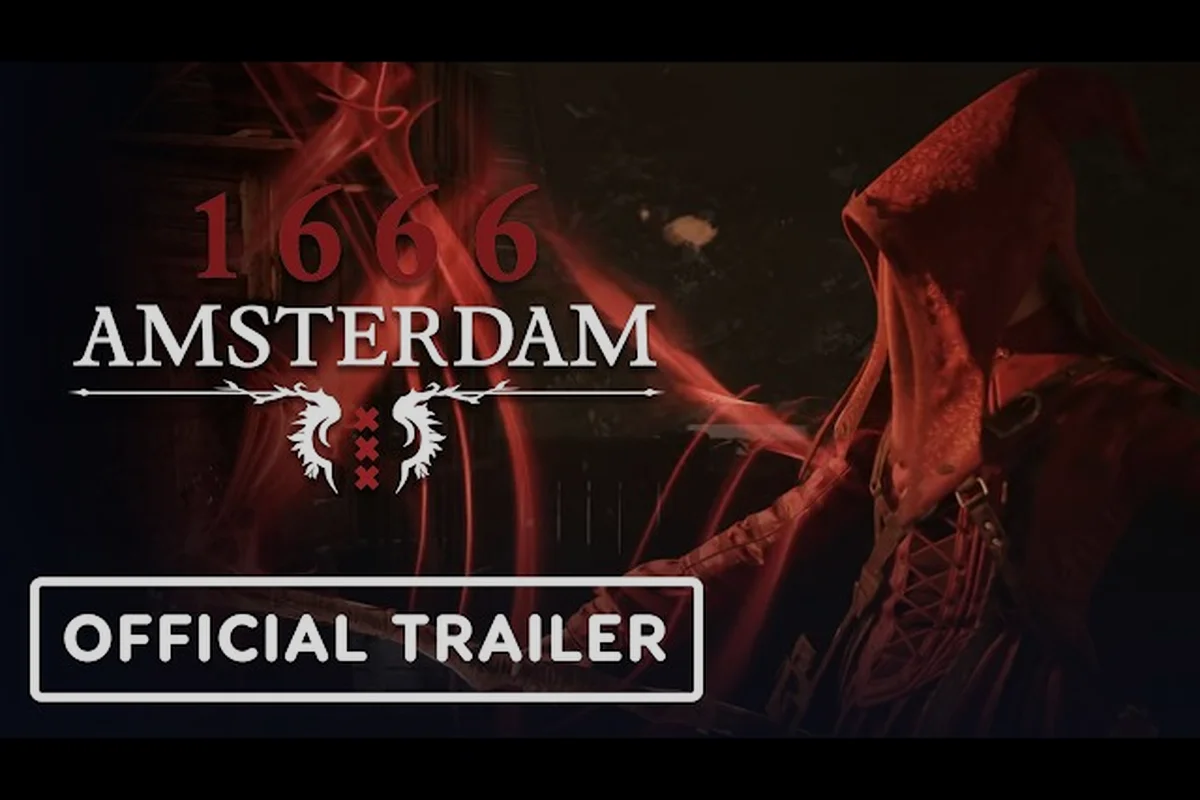
1666 Amsterdam core gameplay revolves around a tense duality: by day you investigate the handcrafted streets of Amsterdam as Noa, the Collector, and by night you confront demonic Originals hiding behind human faces. What makes this third-person action-adventure from Panache Digital Games stand out is that you can also play as Aaron the cat, a second protagonist whose feline abilities open entirely different routes through every investigation. Because the game launches into Early Access on August 25, 2026, understanding the core loop now — how to switch characters, when to use cat stealth, and how player choice shapes each Esbat confrontation — will put you far ahead of the curve when you step into the city.
The 1666 Amsterdam core gameplay loop is built around a day/night cycle that forces you to gather evidence before you can fight. During daylight hours, Noa uses her witchcraft to identify which citizens are actually demonic Originals, while Aaron the cat can slip into spaces no human could reach. At night, the Esbat begins, and every choice you made during the investigation determines which battles you can win and which secrets you unlock. This guide breaks down the full system, from the basics of controlling both protagonists to the advanced tactics that community testers have already mapped out in the free prologue. Because the prologue’s free slice only hints at how your relationship choices ripple outward, understanding the full cast dynamics is where the real payoff lives—so before you commit to a dialogue path, check our breakdown of the 1666 Amsterdam Supporting Characters to see which allegiances actually shift the story’s locked content.
Core Gameplay Loop: Investigation Meets Confrontation
The foundation of 1666 Amsterdam core gameplay is a two-phase structure that repeats across every chapter, and mastering the rhythm between these phases matters more than raw combat skill. During the day, you walk through a meticulously recreated 17th-century Amsterdam, talking to citizens, examining objects, and using Noa's supernatural sight to spot tells that reveal an Original's true nature. The game gives you no quest markers for most of this — instead, you follow environmental clues, overheard conversations, and the subtle behavioral differences that distinguish a normal citizen from a demon in disguise.
The night phase flips everything. Once the Esbat begins, the streets transform, and the Originals you identified during the day become visible in their true demonic forms. This is where combat takes center stage, but it is not a pure action sequence — the information you gathered determines which Originals you can confront, which weaknesses you can exploit, and which story branches remain open. According to the official feature videos from Panache Digital Games, the day/night loop is the single most important system in the game, and every other mechanic feeds into it.
Here is the essential rhythm you will repeat throughout the campaign: each cycle opens with you scouting a location as the cat, using your prowl and heightened senses to tag enemies and mark loot before ever engaging. Once intel is gathered, you trigger a character switch to the human protagonist, leveraging the element of surprise for a direct confrontation. This investigation-then-assault loop is the core of 1666 Amsterdam dual protagonist gameplay, ensuring that no fight ever begins without a strategic advantage.
-
Day investigation — gather evidence, identify Originals, and unlock dialogue options that reveal hidden lore.
-
Night Esbat — confront the Originals you flagged, using combat and witchcraft to banish them.
-
Character switching — alternate between Noa and Aaron the cat to access routes that only one protagonist can reach.
-
Player choice — decide which Originals to pursue and how to handle each confrontation, which changes the story's direction.
What makes this loop compelling is that the two phases feed each other directly. A thorough day investigation makes the night phase dramatically easier, because you will know exactly which enemies are vulnerable to which of Noa's spells. A rushed day phase, by contrast, leaves you fighting blind at night, which the community reports is the most common cause of early-game frustration. The game rewards patience and observation over reflexes, which is a deliberate design choice from creative director Patrice Desilets, who previously shaped the open-world philosophy of Assassin's Creed.
Playing as Aaron the Cat: Abilities and Stealth Routes
The 1666 Amsterdam how to play as a cat question is one of the most searched topics in the community, and for good reason — Aaron is not a gimmick or a side minigame. He is a fully playable protagonist with his own movement system, abilities, and progression, and the game expects you to switch to him regularly to solve the investigation phase. The extended trailer from IGN Live 2026 showcased Aaron's gameplay extensively, confirming that his sections are as substantial as Noa's.
Aaron's core abilities break down into three categories, each serving a distinct purpose in the investigation loop: stealth (paw-silent movement and wall-scratching distractions), environmental interaction (pawing at vents, toggling switches, and knocking objects off ledges to create noise diversions), and observation (a heightened scent/vision mode that highlights interactive clues). This triad ensures that every cat-based action feeds directly into the detective puzzle, forcing you to weigh risk versus reward when choosing between a silent flank or a loud misdirection to outwit patrolling guards.
-
Stealth movement — Aaron can climb walls, squeeze through narrow gaps, and move silently across rooftops, which lets him scout locations before Noa commits to entering them.
-
Sensory perception — his feline senses highlight hidden objects, secret passages, and environmental details that Noa's witchcraft cannot detect.
-
Distraction tactics — Aaron can knock over objects, scratch doors, or draw an NPC's attention, creating openings for Noa to slip past or set up an ambush.
The 1666 Amsterdam cat abilities gameplay is not just about being smaller and quieter — Aaron's unique perspective literally changes what information you can gather. When you play as the cat, the world renders differently: scents appear as colored trails, hidden compartments glow faintly, and you can hear conversations through walls that Noa would miss entirely. This means a full investigation often requires you to scout an area as Aaron first, then return as Noa to act on what you discovered.
Aaron's Movement and Navigation
Aaron's movement system is the most distinctive part of 1666 Amsterdam cat gameplay. Unlike Noa, who moves like a standard third-person action protagonist, Aaron has a dedicated parkour kit designed around feline agility. He can leap between rooftops, balance on narrow ledges, and drop silently from heights that would injure Noa. The game's handcrafted Amsterdam is built with this in mind — every district has vertical routes that only Aaron can access, which means exploring as the cat often reveals shortcuts that make later investigations faster.
Community testers who played the free prologue report that Aaron's movement takes about thirty minutes to feel natural, mainly because the camera behaves differently when you are low to the ground. The game compensates with a dedicated cat-vision mode that highlights climbable surfaces and landing zones, so the learning curve is gentler than it first appears. Once you internalize Aaron's movement, though, the entire city opens up, and you will find yourself switching to him even in situations where Noa could technically proceed, simply because the cat's route is faster and safer.
Using Feline Senses for Investigation
The 1666 Amsterdam cat abilities gameplay reaches its peak during the investigation phase, because Aaron's senses are effectively a second investigation tool that complements Noa's witchcraft. Where Noa sees magical auras and demonic residue, Aaron sees the physical world in sharper detail — paw prints, disturbed dust, and subtle signs of passage that reveal where NPCs have been and what they have touched. This is particularly useful for tracking an Original's daily routine, since you can follow their scent trail as the cat to learn where they hide their secrets.
The game encourages you to alternate between both protagonists' investigative abilities, and the most efficient approach is to scout with Aaron first, then confirm with Noa's magic. For example, Aaron might find a hidden door behind a bookshelf, but only Noa's witchcraft can reveal the magical seal that locks it. This interdependence between the two protagonists is the heart of 1666 Amsterdam dual protagonist gameplay, and it is what separates the game from other titles that simply give you two characters with different combat styles.
Switching Characters: The Dual Protagonist System
| Feature | Day Phase (Investigation) | Night Phase (Esbat) |
|---|---|---|
| Primary objective | Identify Originals hiding among Amsterdam's citizens | Confront Originals in their true demonic form |
| Gameplay focus | Exploration, clue-gathering, social deduction | Combat, witchcraft abilities, direct confrontation |
| Environment | Handcrafted Amsterdam streets, gablestones visible | Demonic true forms revealed, night-only encounters |
| Key mechanic | Uncover demonic entities behind human faces | Face your demons in direct combat |
| Player stance | Passive investigation, observation | Active engagement, offensive witchcraft use |
The 1666 Amsterdam switching characters gameplay is designed to be seamless, because the game expects you to change protagonists frequently — sometimes multiple times within a single investigation. You can switch between Noa and Aaron at any moment outside of active combat, and the game provides a dedicated button for instant swapping. When you switch, the camera repositions to the new protagonist, and the game briefly highlights nearby points of interest that are relevant to the character you just became.
What makes the dual protagonist system more than a simple character swap is that each protagonist has their own inventory, their own progression, and their own relationship with the world. Noa collects magical artifacts and learns new spells, while Aaron unlocks new feline abilities and discovers cat-specific collectibles. The 1666 Amsterdam player choice element enters here, because you must decide how to invest your limited time during each day phase — do you spend it gathering magical reagents as Noa, or scouting the city as Aaron to unlock shortcuts and secrets?
Here is a comparison of what each protagonist brings to the core gameplay loop: Aelbert’s toolkit is built for direct confrontation, letting you parry and counter enemy attacks with his rapier to build up a "Momentum" meter that unlocks finishers, whereas Cornelia’s strengths lie in stealth and agility, allowing you to vault across rooftops and use her throwing knives to silently dispatch guards before they raise an alarm. This dichotomy creates a strategic push-and-pull in 1666 Amsterdam core gameplay: you’ll want to use Cornelia for scouting and infiltration to thin out patrols, then switch to Aelbert to handle the heavier, armored foes that a knife can’t pierce, rewarding players who master the timing of the dual protagonist system over brute-forcing every encounter.
| Aspect | Noa the Collector | Aaron the Cat |
|---|---|---|
| Primary role | Combat, witchcraft, dialogue | Stealth, scouting, navigation |
| Investigation tool | Magical sight, aura reading | Feline senses, scent tracking |
| Movement style | Standard third-person | Parkour, climbing, rooftop traversal |
| Combat capability | Spell-based offense and defense | Limited, mostly evasion |
| Unique access | Magical seals, witch-only doors | Narrow gaps, rooftops, hidden passages |
| Progression | New spells, artifact upgrades | New feline abilities, collectibles |
The table above illustrates why the game insists on both protagonists — neither one can complete a full investigation alone. A door that requires Noa's magic might be located on a rooftop that only Aaron can reach, forcing you to plan a route that uses both characters in sequence. This is the core of 1666 Amsterdam switching characters gameplay, and it is a far more interesting puzzle than simply picking a character and sticking with them.
When to Switch: Practical Scenarios
Knowing when to switch characters is the difference between a smooth investigation and a frustrating one, and the community has identified several reliable patterns. The most common trigger is encountering an obstacle that only one protagonist can bypass — a high window for Aaron, a magical barrier for Noa. But the better players switch proactively, not reactively, using Aaron to scout ahead and then switching to Noa before she enters a dangerous area.
Another key scenario is dialogue. Noa is the only protagonist who can talk to NPCs, but Aaron can listen to conversations from hiding spots that Noa cannot reach. If you suspect an NPC is hiding something, scout their location as Aaron first, listen to their private conversations, and then approach them as Noa with the knowledge you gained. This layered approach to information gathering is what makes 1666 Amsterdam dual protagonist gameplay feel genuinely innovative, because the two characters are not just different movesets — they are different ways of understanding the world.
Player Choice and Its Impact on the Esbat
The 1666 Amsterdam player choice system is woven into every layer of the game, from which Originals you identify during the day to how you confront them at night. The game tracks your decisions across multiple chapters, and the community reports that even small choices — like whether you spare a minor demon or banish it — can have consequences dozens of hours later. This is not a game with a simple good/evil meter; instead, the narrative branches based on the relationships you build and the information you choose to pursue.
The most impactful choices happen during the Esbat, when you confront an Original in their true form. You are not always forced to fight — some Originals can be reasoned with, bargained with, or even recruited as allies, depending on what you learned during the investigation. The 1666 Amsterdam core gameplay rewards thorough investigation here, because the more evidence you gather, the more options you unlock in each confrontation. A player who rushes through the day phase might only have the option to fight, while a player who investigated deeply might discover a peaceful resolution or a way to gain a powerful ally.
| Choice Type | Day Phase Impact | Night Phase Result |
|---|---|---|
| Who to investigate | Determines which Originals appear at night | Changes which battles are available |
| How to gather evidence | Unlocks dialogue options and lore | Opens peaceful or strategic resolutions |
| Whether to use Aaron | Reveals hidden routes and secrets | Provides alternate escape or ambush options |
| How to handle minor demons | Affects reputation with factions | Alters which allies help you in later Esbats |
The table above shows how the day and night phases are connected through player choice, and it is worth noting that the game does not telegraph most of these consequences. You will often make a decision during a day investigation that only pays off — or backfires — several chapters later. This is a deliberate design choice that rewards replayability, and the community has already begun mapping out the major branches based on the free prologue's content.
Streamlining Investigations and Esbats With Pro Tactics
Once you understand the basic rhythm of 1666 Amsterdam core gameplay, you can start optimizing your approach. The community has identified several advanced tactics that make investigations faster and Esbats easier, and most of them involve using Aaron more aggressively than new players expect. The following list covers the highest-impact techniques reported by players who have spent significant time in the prologue:
-
Scout every area as Aaron first — even if you think Noa can handle it, Aaron's scouting reveals hidden objects and alternative routes that make the subsequent Noa section faster and safer.
-
Use Aaron to mark targets — when Aaron identifies an Original, the game adds a permanent marker to your map, which prevents you from losing track of suspects during complex investigations.
-
Plan your route before switching — because switching has a brief animation, plan your path so that you switch only when you reach the point where the other protagonist is needed.
-
Listen to all conversations — Aaron can overhear NPC dialogues that Noa cannot, and these often contain clues that are not available through any other means.
-
Invest in Aaron's abilities early — the prologue lets you unlock a few feline upgrades, and the community recommends prioritizing scent tracking and silent movement over combat-related abilities.
These tactics work because they align with the game's core design philosophy: information is power, and Aaron is the best information-gathering tool you have. The 1666 Amsterdam cat gameplay is not a side feature — it is the key to mastering the investigation loop, and players who treat Aaron as a primary character rather than a utility tool report significantly smoother playthroughs.
Optimizing the Day Phase
The day phase is where you set up your entire night, and the most efficient players treat it like a puzzle rather than a free-roaming exploration. Start by identifying the day's objective — which Original or location you need to investigate — and then plan a route that uses both protagonists to cover the most ground. Because the day phase has no explicit timer, you might think you can take as long as you want, but the community reports that taking too long can cause some NPCs to move or events to expire.
A practical approach is to use Aaron to scout the entire district first, marking all points of interest and identifying which locations require Noa's magic. Then, switch to Noa and follow a direct route through the marked locations, using her witchcraft to unlock what Aaron found. This two-pass approach is more efficient than wandering as Noa and discovering obstacles one at a time, and it ensures you do not miss hidden areas that only Aaron can reach.
Mastering the Night Esbat
The night Esbat is where your preparation pays off, and the combat system rewards players who know their enemy's weaknesses. Each Original has a specific vulnerability that you can discover during the day phase — some are weakened by certain spells, others by environmental hazards, and a few can be defeated without combat entirely if you have the right evidence. The 1666 Amsterdam core gameplay does not require you to fight every enemy, and choosing the right approach for each Original is a core part of the strategy.
For combat encounters, the community recommends using Noa's witchcraft at range to control the battlefield, then switching to Aaron to escape or reposition if the fight goes poorly. Aaron is not a combat character, but his mobility makes him excellent for escaping dangerous situations or reaching a vantage point where Noa can attack from safety. This hybrid approach to combat is unique to 1666 Amsterdam dual protagonist gameplay, and it gives you options that a single-character action game would not provide.
Frequently Asked Questions
How do I switch between Noa and Aaron in 1666 Amsterdam?
Switching is available at any time outside of active combat using the dedicated swap button. The game highlights nearby points of interest when you switch, helping you identify what the new protagonist can interact with. Practice switching during the day phase to learn each character's unique access points.
What are the best cat abilities to unlock first in 1666 Amsterdam?
Prioritize scent tracking and silent movement, as these directly improve your investigation efficiency. Scent tracking reveals hidden NPC routes, while silent movement lets you scout without alerting enemies. Combat-related cat abilities are less valuable because Aaron is not designed for direct confrontation.
Can I complete the game using only Noa without playing as Aaron?
Technically possible, but not recommended. Many areas and secrets are only accessible through Aaron's feline abilities, and the community reports that skipping cat sections locks you out of significant content. The game is designed around 1666 Amsterdam dual protagonist gameplay, so you will miss important information without Aaron.
How does player choice affect the ending of 1666 Amsterdam?
Your choices during investigations and Esbats determine which story branches remain available, and the game tracks decisions across multiple chapters. The community has identified several major branching points, but the full scope of consequences will only be clear after the Early Access launch on August 25, 2026.
Is 1666 Amsterdam core gameplay similar to Assassin's Creed?
Yes, but only superficially. Patrice Desilets directed the original Assassin's Creed, so the DNA is there, yet 1666 Amsterdam's day/night investigation loop and dual protagonist system—Noa by day, Aaron the cat for stealth—create a distinct experience focused on observation and choice, not open-world combat.