
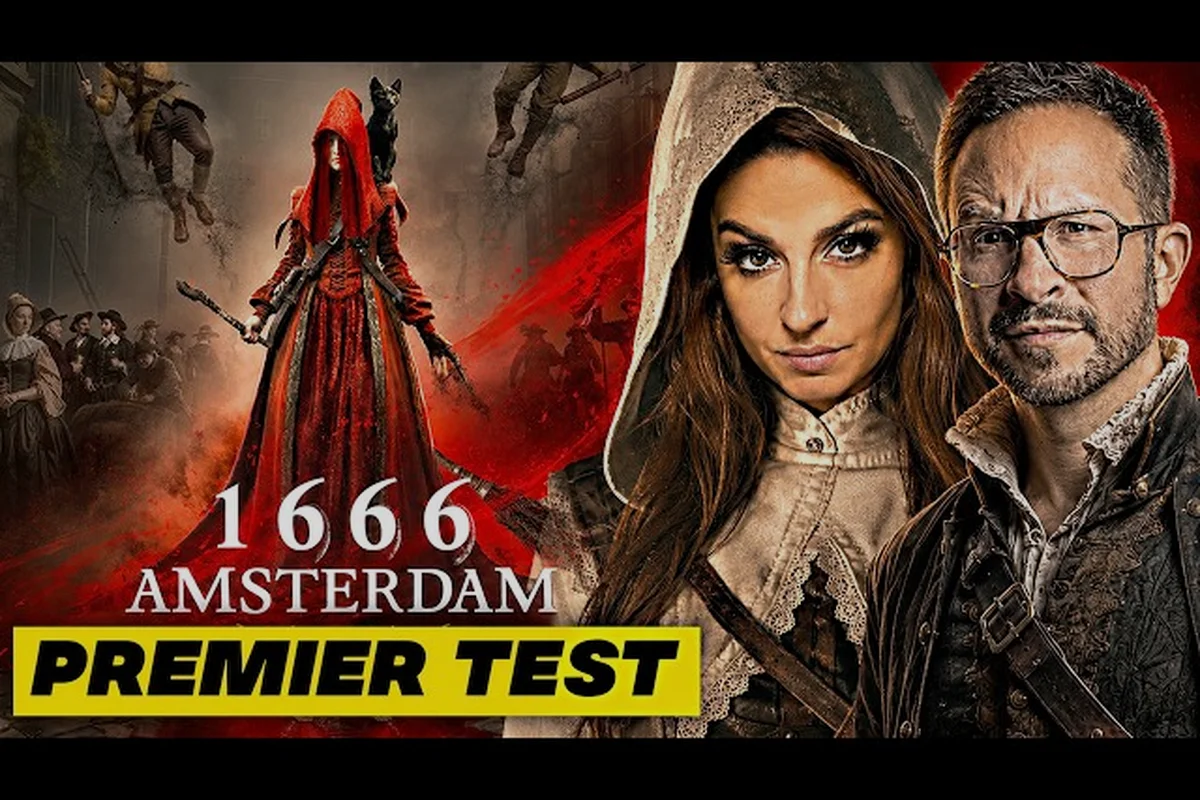
The 1666 Amsterdam AI art controversy erupted in early August 2026 when players noticed what appeared to be AI-generated cover art on the game's Steam page, sparking heated debate across Reddit and Discord. This matters because Patrice Désilets' studio built its reputation on handcrafted artistry, so the community wanted clarity on whether Panache Digital Games had quietly shifted to AI assets. Here's the full timeline, the studio's official response, and how the controversy connects to the game's impressive 500,000 wishlist milestone. The studio has since clarified that no AI assets were used in the final build, but for a deeper look at how the community first reacted to the initial reveal and the subsequent patch notes, see our 1666 Amsterdam Community News breakdown, which tracks the full back-and-forth between players and developers leading up to the wishlist milestone.
The 1666 Amsterdam AI Art Controversy: What Actually Happened
The controversy began when sharp-eyed community members spotted inconsistencies in the promotional artwork displayed on the 1666: Amsterdam Steam page. Players pointed to telltale signs like distorted architectural details, irregular window patterns, and texture anomalies that often appear in AI-generated imagery. Within hours, screenshots circulated across the r/1666Amsterdam subreddit, with some users expressing disappointment that a studio known for meticulous handcrafted environments might be cutting corners.
The timing amplified the backlash because Panache had just celebrated a major 333,000 wishlist milestone in late July, and the team was actively engaging with fans through their official dev blog series, THE MIDNIGHT CHRONICLE. The contrast between the studio's artisanal messaging and the suspected AI assets created a jarring disconnect that fueled the controversy further.
Initial Community Reactions on Reddit
The r/1666Amsterdam community quickly split into distinct camps. Some players demanded immediate removal of the suspected AI assets, arguing that the game's identity depends on authentic handcrafted visuals. Others took a more measured approach, noting that AI tools can serve as concept exploration aids without replacing the final handcrafted product. A third group pointed out that the prologue, which players had already experienced, contained none of the problematic imagery, suggesting the controversy centered on marketing materials rather than in-game content.
Community consensus, according to player reports, leaned toward wanting more gameplay footage before launch rather than dwelling exclusively on the cover art dispute. Many threads pivoted to discussing whether the game's Early Access launch on August 25, 2026 would deliver on the atmospheric, story-led action-adventure that Désilets promised.
Panache's Official Studio Statement on AI Assets
Panache Digital Games responded to the 1666 Amsterdam AI art controversy with a formal studio statement posted across their Steam News Hub and social channels. The statement acknowledged that certain promotional materials had indeed incorporated AI-assisted workflows during the concept phase, but emphasized that all final in-game assets remain handcrafted by the team. The studio clarified that AI tools were used for early visual exploration and mood board development, not for producing final shipping content.
The statement also addressed the 500k wishlist milestone, which the team described as both humbling and motivating. Panache thanked the community for their patience and reiterated their commitment to transparency moving forward. They promised that future marketing materials would clearly disclose any AI involvement, a move that many players interpreted as a direct response to the backlash.
What the Studio Statement Did and Didn't Address
The statement successfully clarified the scope of AI usage, but left some questions unanswered. Players noted that the studio didn't specify which specific promotional pieces contained AI-assisted elements, nor did they commit to replacing the disputed cover art. Some community members also pointed out that the statement's language around AI-assisted workflows remained vague enough to encompass various production stages.
Despite these gaps, the overall reception was cautiously positive. According to community data, most players appreciated the studio's willingness to engage directly rather than letting the controversy fester. The statement's timing, arriving just days after the initial Reddit threads gained traction, suggested that Panache was monitoring community sentiment closely.
The 500k Wishlist Milestone: Context and Significance
The 1666 Amsterdam wishlist milestone of 500,000 represents a remarkable achievement for a game that spent years in development limbo before its revival. To put this number in perspective, the game's Steam page shows that the prologue has generated substantial organic interest, with the wishlist count growing from 333,000 to 500,000 in roughly two weeks. This acceleration suggests that the AI art controversy, despite its negative framing, actually drove significant visibility and curiosity about the project.
The milestone carries particular weight because it demonstrates sustained interest in Désilès' vision despite the game's troubled history. The project was originally announced over a decade ago, canceled, and then revived under Panache Digital Games. The current wishlist numbers indicate that both longtime fans and new players are eager to see what the studio delivers with its dark, story-led action-adventure set in 17th-century Amsterdam.
Comparing Wishlist Growth to Industry Benchmarks
| Milestone | Date Achieved | Growth Rate | Notable Context |
|---|---|---|---|
| 100,000 wishlists | March 2026 | Initial surge | Prologue first released |
| 333,000 wishlists | Late July 2026 | Steady growth | Community celebration post |
| 500,000 wishlists | Early August 2026 | Rapid acceleration | AI art controversy peak |
| Early Access launch | August 25, 2026 | TBD | Full game availability |
The acceleration between the 333k and 500k milestones is particularly notable because it coincided with the controversy's peak visibility. While correlation doesn't equal causation, community reports suggest that many new players discovered the game through controversy-related discussions and then wishlisted it after exploring the prologue. The controversy-driven visibility appears to have converted curiosity into concrete wishlist additions.
How the Controversy Affects the Early Access Launch
The 1666 Amsterdam AI art controversy arrives at a critical moment because the game's Early Access launch is scheduled for August 25, 2026. Panache has positioned the Early Access period as an opportunity to refine gameplay mechanics, expand the handcrafted Amsterdam environment, and incorporate player feedback before the full release. The controversy introduces an additional layer of scrutiny that the studio must navigate carefully.
Players who experienced the prologue have reported that the actual gameplay contains none of the AI-related issues seen in promotional materials. The handcrafted Amsterdam environments, day-and-night investigation mechanics, and witchcraft-based combat all received positive reception in community discussions. This distinction between marketing assets and in-game content has become a central talking point in defending the game's artistic integrity.
Key Considerations for the Launch Window
-
Transparency expectations: Players now expect clear disclosure of any AI involvement in future marketing materials, and Panache's statement committed to this standard.
-
Gameplay proof: Community consensus, as reported on Reddit, emphasizes that the studio needs to show more actual gameplay footage before launch to reassure skeptical players.
-
Prologue goodwill: The free prologue continues to serve as the game's strongest asset, letting players experience the handcrafted quality firsthand.
-
Patch responsiveness: The studio's recent mouse controller dead zone setting patch for the prologue demonstrates their commitment to addressing player feedback quickly.
The studio's handling of the controversy will likely set the tone for how they manage community expectations during the Early Access period. Players who felt heard during this dispute may be more forgiving of early access rough edges, while those who felt dismissed could become more critical.
The Broader Industry Conversation Around AI Assets
The 1666 Amsterdam AI art controversy fits into a larger industry-wide discussion about AI's role in game development. While some studios have embraced generative AI tools for everything from concept art to voice acting, others have positioned handcrafted artistry as a core differentiator. Panache's situation is particularly delicate because the studio's identity is deeply tied to Désilès' reputation as a visionary creative director who shaped the Assassin's Creed franchise.
The controversy also highlights the challenge studios face when using AI for internal purposes. Even when AI tools are limited to concept exploration, the resulting materials can leak into public-facing assets if proper oversight isn't maintained. This oversight gap appears to be what happened with the disputed cover art, based on the studio's statement.
Lessons for Developers and Players
| Stakeholder | Key Takeaway | Practical Implication |
|---|---|---|
| Developers | AI tools need clear boundaries | Establish internal policies for AI asset usage |
| Marketing teams | Disclosure prevents backlash | Label AI-assisted materials from the start |
| Players | Context matters | Distinguish between concept aids and final assets |
| Community managers | Speed builds trust | Respond quickly with transparent statements |
The broader conversation suggests that AI art controversies will likely continue as more studios experiment with these tools. The key differentiator will be how studios communicate their workflows and whether they maintain clear separation between AI-assisted exploration and handcrafted final products.
How the AI Art Scandal Could Shape the Launch's Trajectory
| Milestone / Event | Date | Source Detail |
|---|---|---|
| Early Access launch | August 25, 2026 | Steam store page listing |
| Wishlist milestone | 333,000 | "333,000 Thank you" news item |
| Prologue patch | Pre-Early Access | "Mouse controller dead zone setting" fix |
| Dev blog issues | 01–04 | "THE MIDNIGHT CHRONICLE" official blog |
| Steam news hub items | 14 total | Includes launch, EA info, and patch posts |
Looking ahead, the 1666 Amsterdam AI art controversy appears unlikely to derail the game's momentum, given the strong wishlist numbers and positive prologue reception. However, the studio faces ongoing pressure to deliver on its artistic promises. The Early Access launch will serve as the ultimate test of whether Panache can translate its handcrafted vision into a compelling full experience.
Community sentiment, based on player reports, suggests that most wishlist holders are waiting to see substantial gameplay footage before committing to a purchase. The studio's ability to showcase the day-and-night investigation mechanics, witchcraft combat, and atmospheric Amsterdam setting will likely determine whether the 500k wishlists convert into actual sales.
For players following this story, the controversy offers an interesting case study in how modern game development navigates the intersection of artistic integrity and emerging technology. The outcome may influence how other studios approach AI tools in their own pipelines, making this a story worth watching beyond just the game itself.
Frequently Asked Questions
What exactly caused the 1666 Amsterdam AI art controversy?
Players noticed AI-generated artifacts in promotional cover art on the Steam page, including distorted architectural details and texture inconsistencies. The community flagged these issues on Reddit, which prompted Panache Digital Games to issue a formal studio statement acknowledging that AI-assisted workflows were used during concept development phases.
Did Panache confirm that AI assets are in the final game?
No, the studio statement explicitly clarified that all final in-game assets remain handcrafted by the team. AI tools were used only for early visual exploration and mood board development. The prologue, which players can download for free, contains no AI-generated content according to community reports and the studio's statement.
How did the controversy affect the game's wishlist numbers?
The controversy coincided with a significant acceleration in wishlist growth, jumping from 333,000 to 500,000 in roughly two weeks. While correlation doesn't prove causation, community reports suggest that controversy-driven visibility brought new players to the game, many of whom wishlisted after trying the prologue.
When does 1666: Amsterdam launch in Early Access?
The game launches in Early Access on August 25, 2026, according to the official Steam page. The prologue is currently available for free, and the studio has been actively patching it based on player feedback, including recent fixes to mouse and controller dead zone settings.
Will Panache remove the disputed AI cover art?
As of now, Panache has not explicitly committed to replacing the disputed AI cover art. The studio only promised clearer AI disclosure in future marketing materials, leaving the artwork unchanged. Players hoping for a swap will need to wait for further announcements, though the transparency pledge is a step forward.